
Workplace Emergency Response: CPR Training, AEDs & Action Plans
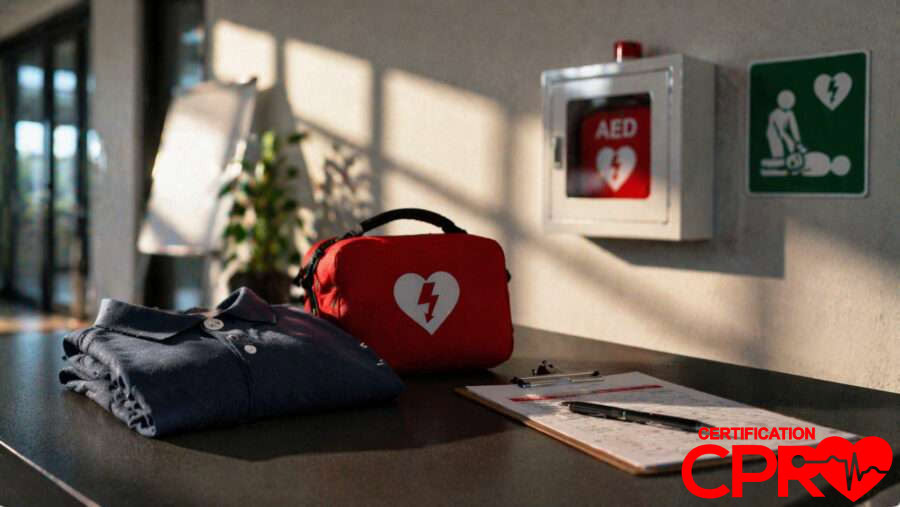
Most workplace emergency plans do not fail because nobody cares. They fail because the pieces live in different places: the AED is on the wall, the first aid kit is in a cabinet, the policy is in a binder, and the people who would respond have never practiced together.
A better setup feels simpler in the moment. The team knows who calls 911, who starts CPR, who grabs the AED, and where that equipment lives. The plan fits the building instead of sounding good only on paper.
That matters whether the building is a Lake Nona medical office, a warehouse near Taft, or a hotel back-of-house area near the attractions. When someone collapses, the first response team is whoever is already inside.
The Importance of CPR Training in the Workplace
Workplaces are full of ordinary days until one is not ordinary anymore. A sudden collapse on a warehouse floor or in an office break room can turn into a cardiac emergency in the minutes before outside help gets there.
Upcoming CPR Class Dates and Times
CPR training matters at work because the people already in the building shape the first few minutes, whether they signed up for that role or not. OSHA's medical services and first aid standard, 29 CFR 1910.151, requires trained first-aid personnel when a clinic or hospital is not in near proximity to the workplace.
Hands-on training gives employees more than awareness. It gives them a sequence they can use: call 911, start CPR, get the AED, and keep the response moving until EMS takes over.
Creating a Workplace Emergency Action Plan
A workplace emergency action plan should answer the obvious questions before an emergency ever tests it. Who calls 911? Who starts CPR? Who gets the AED? Where is the first aid kit? Which entrance should EMS use, and who is meeting them there?
A workable plan is short enough to remember and specific enough to use. Vague policy pages do not help when nobody knows who is in charge.
The plan should also fit the building. A two-story corporate office has different AED placement and coverage needs than a large warehouse or a school with multiple wings, and the role assignments should reflect those differences.
Why Your Business Needs AEDs
An AED gives the workplace a tool for the first few minutes of sudden cardiac arrest. It checks the heart rhythm and tells the rescuer whether a shock is advised.
Cardiac arrest is a time problem. CPR helps keep blood moving, but an AED may need to get into the response fast when a shockable rhythm is present.
An AED only helps if it is accessible, visible, and familiar to the people who may have to grab it. Planning and training belong together.
Workplace AED Readiness Checklist
Readiness basics are simple: the AED is easy to find, easy to reach, and not locked behind a system nobody remembers under pressure.
The battery and pads need to be current. The area around the unit should stay clear. Staff should know where it is and who is expected to grab it during an emergency.
One person or one role should also own the readiness checks. If everyone assumes someone else owns it, small problems sit until an emergency surfaces them.
Where Onsite CPR Training Fits
Training is where the plan stops being theoretical. A written emergency plan can assign roles, but employees still need to practice the sequence: call 911, start CPR, bring the AED, clear the person for analysis, and keep the response moving until EMS arrives.
Upcoming CPR Class Dates and Times
For groups, onsite CPR training can make sense because employees practice together in the same building where they would respond. That makes the class easier to connect to the actual AED location, entrances, stairwells, front desk, security desk, or shop floor.
The goal is a team that already knows what to do, not another safety binder that nobody opens when an emergency stops being theoretical.