
Recovery Position: When to Use It and How to Position Someone Safely
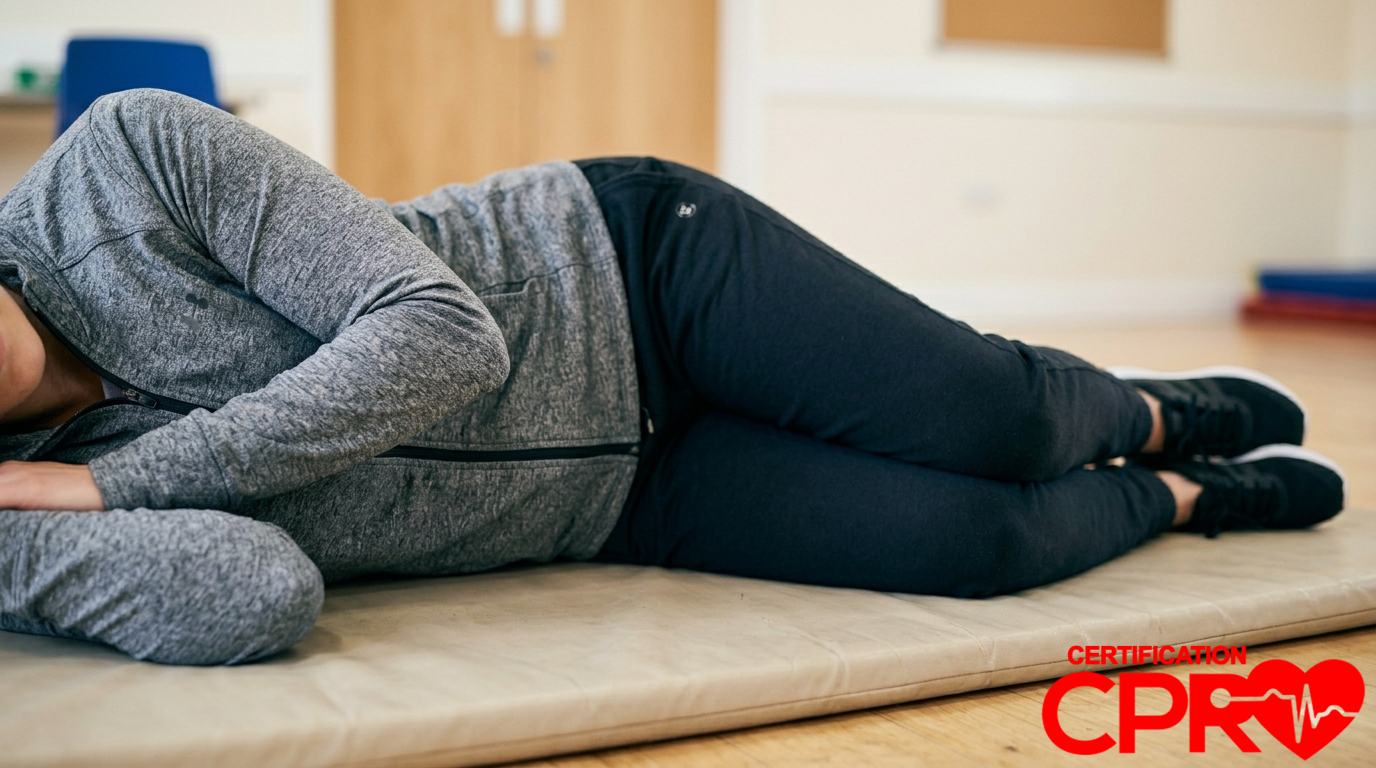
The recovery position is one of those first-aid skills people hear about long before they know when it actually applies. The short answer is simple: it is for a person who is unresponsive or barely awake, still breathing normally, and not currently in cardiac arrest.
Think about the situations where that question shows up. A teen takes a hard hit at practice and stays groggy. A relative faints, comes around a little, but still is not fully with it. A person is breathing after a seizure and may vomit. In those moments, rolling someone onto their side, leaving them flat, and starting CPR are very different decisions.
The recovery position sits in that middle ground. It helps protect the airway while you wait for EMS, but it only makes sense when the person is breathing on their own and does not need chest compressions.
What the Recovery Position Is
The recovery position means placing a breathing person on their side in a way that helps the airway stay open. The whole reason for using it is to lower the chance that the tongue, saliva, or vomit will block the airway while the person is too out of it to protect it well on their own.
Upcoming CPR Class Dates and Times
Exact positioning varies a little by training program and body size, but the goal stays the same. You want the person stable on their side, the head supported, and the mouth angled downward so fluids can drain instead of collecting where breathing can be compromised.
When to Use the Recovery Position
Use the recovery position when the person is:
- unresponsive or not fully alert
- breathing normally on their own
- not showing a clear need for CPR
- in a situation where the airway could become blocked
That can include a person who faints and stays groggy, somebody who is breathing after a seizure, or an unconscious person who may vomit. In situations like those, leaving the person flat on their back can make airway problems harder to manage.
You still call 911 when the situation is serious. The recovery position is not the whole response; it is one useful step inside the larger response while you keep watching breathing and wait for EMS.
When Not to Use It
Do not use the recovery position if the person is not breathing normally. At that point, the situation has crossed into the cardiac-arrest response: call 911, start CPR, and use an AED if one is available. The recovery position belongs to the breathing-but-not-fully-alert situation, not to cardiac arrest.
It may also be the wrong move if you suspect a serious spinal injury, major neck or back trauma, or a high-force mechanism like a bad fall, vehicle crash, or diving injury. In those situations, moving the person without a clear reason can create another problem.
Even then, the airway still matters. If vomiting is happening, the airway is at risk, or the person cannot stay breathing safely while flat on their back, you have to weigh that against the trauma concern instead of rolling them automatically or refusing to move them at all.
How to Place Someone in the Recovery Position
Start by checking responsiveness and breathing. If the person is not responding but is breathing normally, call 911 or direct someone nearby to do it before you settle into positioning.
Once help is on the way, the basic steps are:
- Kneel next to the person.
- Straighten the legs if they are crossed awkwardly.
- Place the arm closest to you out at an angle.
- Bring the far arm across the chest so the back of the hand rests near the cheek.
- Bend the far knee.
- Carefully roll the person toward you onto their side.
- Adjust the top leg so the body stays stable.
- Tilt the head gently and position the mouth downward so fluids can drain.
After that, keep watching breathing and stay with the person. The recovery position is not something you do once and forget. A person can vomit, wake up, stop breathing normally, or look worse while you wait.
Why Vomiting, Airway Protection, and Rechecks Matter
One of the biggest reasons to use the recovery position is airway protection. If a person vomits while lying flat on their back and is not alert enough to turn their head or sit up, the vomit can block the airway or be aspirated into the lungs.
This is one reason the position shows up so often in first aid teaching around seizures, overdoses, fainting, and other altered-consciousness situations. It gives fluids a path out instead of letting them collect where breathing can get compromised.
The recovery position does not fix the medical problem that caused the collapse. It simply gives you a safer holding position while the bigger response is happening.
"Put them on their side" is not the whole instruction. You still keep watching breathing, watching color, and watching for the moment when the situation changes.
If the person stops breathing normally, starts only gasping, or becomes pulseless, the response changes right away. At that point, you are no longer in a recovery-position situation. You are in a CPR situation.
Spinal Injury and Trauma Caution
If there is reason to think the person has a neck, back, or spinal injury, be more careful about moving them. A hard sports collision, a fall from height, a bike crash, or a diving injury changes the picture.
In those cases, you do not roll the person casually. At the same time, you also cannot ignore vomiting, an obstructed airway, or obvious breathing trouble just because trauma may be part of the story.
This is where first aid becomes a judgment call, not a perfect script. If the airway is in danger, keeping the person breathing may still require movement even when trauma is a concern. The best move is a careful, controlled roll with as little twisting as possible while EMS is already on the way.
When to Call 911
Call 911 when the person is unresponsive, has had a seizure, may have overdosed, has trouble breathing, may have a head or spinal injury, or simply is not waking up normally. If someone is impaired enough that you are considering the recovery position, that usually is not a "wait and see" moment.
You should also call 911 if the person vomits repeatedly, stops breathing normally, turns blue or gray, or becomes harder to wake up. The position can buy safer time, but it does not remove the need for emergency evaluation.
Where This Fits in First Aid Training
The recovery position is a useful skill, but it makes the most sense when it sits inside broader first aid and CPR training. People use it better when they also know how to check breathing, recognize choking, spot a seizure emergency, and tell when a situation has crossed over into CPR.
Upcoming CPR Class Dates and Times
It works better as part of a larger class than as a single trick memorized from a short video. If you want training that covers first-aid decisions along with CPR and AED use, the CPR and First Aid class gives that wider emergency-response context. If you want to compare the main class options first, start with CPR Certification Orlando.
Educational note: use this information for general awareness only. It is not a substitute for calling 911, hands-on training, or professional medical judgment during an emergency.