
Can You Catch a Disease While Giving First Aid? Infection Risk and Safe Response
If you are helping someone who is bleeding, vomiting, coughing, or otherwise in rough shape, it is normal to wonder what the infection risk is while you give first aid. Most people are not asking because they do not want to help. They are asking because they want to help without doing something careless.
The risk depends on the kind of contact. Giving first aid does not automatically mean you are going to catch a disease. At the same time, some first-aid situations do involve blood, body fluids, broken skin, or close contact that should be handled with basic protection and common sense.
In Orlando this comes up most for coaches, teachers, church volunteers, and parents who end up first on scene before EMS arrives. The goal is to help people respond safely, not scare them off.
What the Infection Risk Looks Like
Not every first-aid scene carries the same risk. Helping someone with a minor scrape is different from controlling heavy bleeding. Supporting someone after a fainting spell is different from cleaning up blood after an injury.
Upcoming CPR Class Dates and Times
The risk usually comes down to whether you have direct contact with blood or other fluids in a way that creates an exposure route. That might mean:
- blood contacting broken skin
- blood getting into the eyes, nose, or mouth
- direct contact while you have an open cut on your hand
- a hidden sharp or object puncturing the skin during cleanup
That kind of contact is very different from simply being near the person, talking to them, or helping in a way that does not involve meaningful fluid exposure. Physical proximity alone is not the same as a true exposure route.
Which First Aid Situations Raise the Risk Most
The risk goes up in situations that involve:
- visible bleeding
- wound care
- cleanup after an injury
- rescue breaths if barrier devices are not used
- needles, sharps, or broken glass around the scene
- body-fluid contact during care or cleanup
Scene safety and quick assessment matter for that reason. If the first thing you notice is blood, a sharp object, or a messy environment, it makes sense to slow down for a second, grab gloves if available, and keep the response organized.
Slowing down for two seconds is not delay. It helps you avoid careless contact while you help, which is usually the whole point of asking the question in the first place.
Why Gloves and Barrier Protection Matter
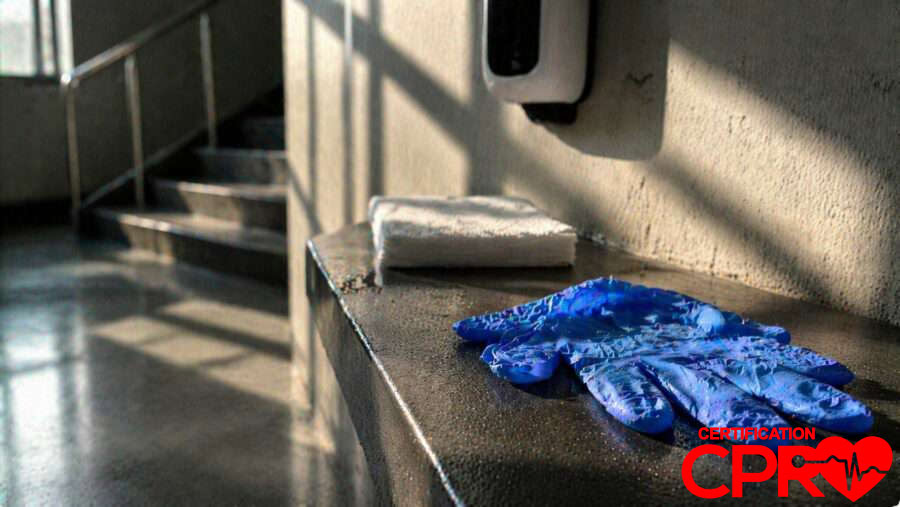
Gloves are one of the simplest ways to lower infection risk during first aid. They create a barrier between your skin and blood or other potentially infectious material, especially if the person is bleeding or you may need to touch contaminated items.
Barrier protection matters most when it is used before contact happens. A lot of first-aid scenes move fast, so it helps to know where gloves or a first aid kit are kept at home, at work, at church, or on the field.
If you are in a setting where first-aid response is part of the job, onsite CPR training is usually the simplest page to review when a team wants hands-on group training.
What to Do if You Do Not Have Gloves
Emergencies do not wait for perfect supplies. If gloves are not immediately available, you still have to make a judgment call based on the urgency of the situation.
For a life-threatening emergency, people may still need help right away. For a less urgent situation, it may make sense to grab a first aid kit, use a clean cloth or other barrier if available, and avoid direct contact while you help.
This is one reason first-aid kits matter. Even a basic kit gives you a better shot at staying helpful without going hands-first into blood or cleanup.
Handwashing and Cleanup Still Matter After the Scene
Protection during the task matters, but so does what happens after. If you gave first aid and may have had contact with blood, body fluids, or contaminated items, handwashing matters right away after the response.
Good cleanup habits include:
- remove gloves carefully if you used them
- wash hands thoroughly with soap and water
- clean contaminated surfaces the right way
- dispose of bloody materials or other contaminated items correctly
Carelessness at this point creates a second exposure risk. A rescuer may do fine while helping, then touch their face, phone, or clean surfaces before washing up. The response is not over just because the immediate danger has passed.
What If Blood Gets on Your Skin?
If blood gets on intact skin, wash the area thoroughly. It is not the same as a puncture or blood getting into the eyes, nose, or mouth, but it still deserves cleanup.
If you have broken skin, an open cut, or a splash to the eyes, nose, or mouth, the situation is more serious and should be handled more like an exposure concern. Workers in organized settings should follow the reporting process right away instead of trying to sort it out alone.
The same goes for a hidden sharp or puncture during cleanup. At that point, the exposure protocol matters more than guesswork.
When EMS or Professional Care Matters More
Some first-aid scenes move beyond routine care fast. Heavy bleeding, unresponsiveness, breathing trouble, severe allergic reaction, seizure, or sudden collapse are not “handle it quietly and clean up later” situations.
At that point, EMS needs to be involved, and your job is to do the most useful immediate step while keeping yourself reasonably protected. If the person is unresponsive and not breathing normally, the response shifts to CPR and AED use, and the AHA BLS CPR class is where that hands-on sequence gets practiced.
The infection-risk question matters, but it should not distract from the bigger emergency when the person in front of you needs immediate action.
Why This Question Comes Up So Often in Orlando
Upcoming CPR Class Dates and Times
This question comes up often in Orlando because a lot of first aid happens outside formal medical settings. Coaches deal with cuts and falls. Teachers help injured students. Church volunteers step in during medical incidents. Workplace supervisors respond before EMS arrives. Family members help at home.
In those settings, people are not looking for a legal memo or a scary list of diseases. They want to know whether they can help safely, what protection matters most, and what to do afterward. A good CPR and First Aid class helps by giving people a practical response path instead of leaving them to improvise under stress.