
BLS vs CPR: Complete Comparison Guide
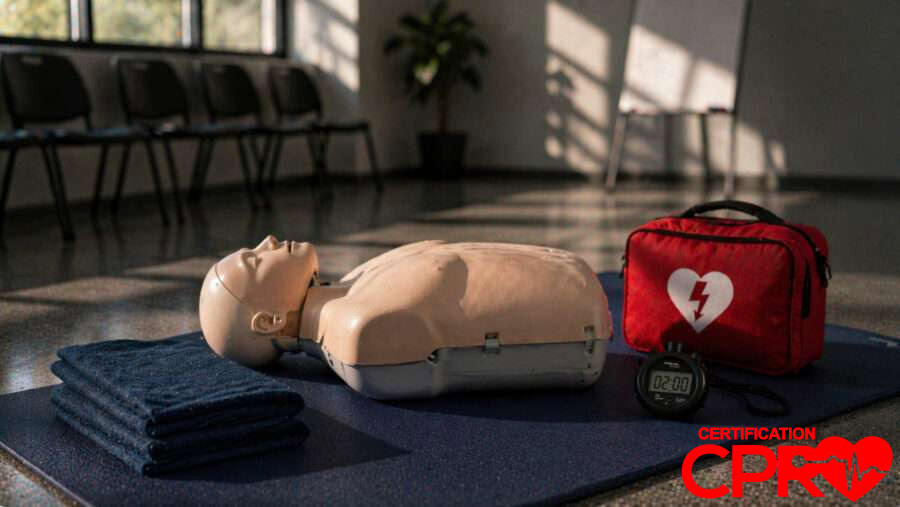
CPR is the word everyone knows. It is the skill people picture when someone collapses: hands on the chest, hard compressions, someone calling 911, an AED being brought over if one is nearby. BLS is less familiar outside healthcare and school paperwork, but in class listings it often matters more. BLS names the structured hands-on course built around CPR, AED use, choking relief, and the age-group differences that a vague CPR label may not make clear.
The confusion starts when those two words get used as if they are interchangeable. A job form may say BLS. A search result may say CPR/AED. A coworker may say, “Just get your CPR card.” Those phrases all point toward lifesaving training, but they do not always point to the same class.
The simplest answer is this: CPR is the emergency skill, and BLS is the broader course that teaches CPR in a defined classroom setting. If your paperwork says BLS, book BLS rather than guessing that any class with “CPR” in the title will count.
BLS is not an unrelated alternative to CPR. It is the course framework that includes CPR and builds the rest of the response around it.
Upcoming CPR Class Dates and Times
What Is BLS (Basic Life Support)?
BLS stands for Basic Life Support. In the class setting, it means more than general emergency awareness. It is a hands-on course with a defined set of skills, which is why the name matters when a school, employer, or healthcare program asks for it.
AHA BLS is one hands-on class that covers adult, child, and infant CPR, AED use, and choking relief. The class puts those pieces together instead of treating CPR as a single isolated maneuver. You practice the response across age groups, learn where the AED fits, and see how the sequence changes when more than one rescuer is involved.
BLS is strongly associated with healthcare-track roles, but it is not useful only to healthcare workers. It also makes sense for non-medical students, teachers, coaches, childcare workers, and anyone who would rather take one serious class than sort through several loose CPR labels and hope the right skills were included.
What Is CPR?
CPR is cardiopulmonary resuscitation, the response used when someone is unresponsive and not breathing normally. In plain terms, it means chest compressions to help move blood through the body, with rescue breaths added when the rescuer is trained to give them.
As a skill, CPR is specific. As a course label, “CPR” can be loose. One class may focus mostly on adult CPR and AED use. Another may include children and infants. Another may pair CPR with First Aid. The word by itself does not always tell you how much was taught, which ages were covered, or whether the class matches what your school or job meant.
The comparison matters because the reader may be searching for CPR because it is the familiar word, while the paperwork may be asking for BLS because it names the class more precisely.
Is BLS the Same as CPR?
Not exactly. CPR is one of the core skills inside BLS, but BLS is the broader class.
A plain-English way to separate them is this: CPR is what you do during cardiac arrest, while BLS is the course that teaches CPR in context. BLS adds AED use, choking relief, adult/child/infant differences, and the teamwork pieces that matter when more than one rescuer is helping.
So when someone says, “I need CPR,” they may be naming the skill correctly but not the class correctly. That mismatch creates most BLS vs CPR confusion.
BLS vs CPR: Key Differences
The easiest way to separate the options is to ask what the class name tells you before you ever walk into the room.
| Option | What the label means | Best fit | What to watch |
|---|---|---|---|
| AHA BLS | A hands-on class covering adult, child, and infant CPR, AED use, and choking relief. | Healthcare-track students, jobs or schools that ask for BLS, and anyone who wants the broader class. | If the paperwork says BLS, this is the direct answer. |
| Generic “CPR” label | The lifesaving skill itself, or a class whose details depend on the provider. | Personal knowledge or situations where no one has named a required course. | The title may not tell you which ages, skills, or card type are included. |
| CPR + First Aid class | CPR training plus first-aid coverage for burns, bleeding, injuries, and sudden illness. | People who want broader emergency-response training in addition to CPR. | First Aid adds useful coverage, but it does not replace BLS when BLS is required. |
The classroom difference is practical, not just semantic. A basic CPR/AED class may teach the core public response: recognize cardiac arrest, call 911, start compressions, and use the AED. AHA BLS goes wider. It covers adult, child, and infant responses, brings choking relief into the same training, and spends more time on the kind of two-rescuer coordination that healthcare-track students are expected to know.
That does not make every simpler CPR class useless. It means the name “CPR” does not always tell you enough by itself. BLS gives you a clearer answer before class starts because the expected pieces are already built into the course.
A class can be useful and still be the wrong class for a job, school, or clinical rotation. If the requirement in front of you says BLS, choose BLS. If it only says CPR certification and someone will check the card later, BLS answers more of the possible questions up front.
Which Certification Do You Need?
Start with the exact wording you were given. If the form, onboarding packet, or school checklist says BLS, do not translate that into a generic CPR search. Book AHA BLS.
- If the paperwork says BLS, book the AHA BLS CPR class.
- If it only says CPR certification but the card will be checked by a school, employer, clinical site, or licensing-related program, BLS is the better match.
- If you also want training for burns, bleeding, allergic reactions, and injuries, add First Aid. The CPR and First Aid class expands the training, but First Aid does not replace BLS.
- If the wording is still fuzzy, how to choose the right CPR certification program walks through the booking side in more detail.
The practical goal is to prevent the annoying version of this problem: taking a class, handing in the card, and then learning you need to take BLS after all.
If you are paying out of pocket, it is natural to notice speed and price first. But the cheaper class stops being cheaper the moment you have to take another one. Spend the extra five minutes matching the class to the requirement before you register.
BLS Certification for Healthcare Providers
Healthcare employers, nursing programs, dental programs, clinical rotations, and hospital onboarding packets use the term BLS because they need more than casual CPR familiarity. They need to know that you practiced the response in a hands-on class that includes adults, children, infants, AED use, choking relief, and the rescuer roles that show up in clinical settings.
The same logic can show up outside hospitals too. A childcare employer, school program, or coached activity may use broad CPR wording in conversation, then ask for a more specific class when it is time to turn in the card. Exact wording matters before you book, not after.
Upcoming CPR Class Dates and Times
In a healthcare-track setting, those details are not paperwork trivia. Adult-only CPR does not answer a pediatric scenario. AED awareness does not replace AED practice. A one-rescuer public message is not the same as working through two-rescuer CPR. BLS puts those pieces into one class, which is why the name carries weight.
One rule covers most situations: if the form says BLS, take BLS. If the form is vague but the card will be checked by a job, school, or clinical program, BLS is the more direct choice.